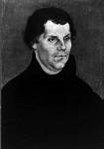
Quick thoughts on John Locke

John Locke Summary

The Germans, who hitherto have had the history of education in their own hands, have uniformly attributed an important part in it to one Englishman and one only — the philosopher Locke; and their first well-known historian, F. H. Ch. Schwarz, has asserted that ‘modern pedagogy is more or less directly [a safe form of statement] the pedagogy of Locke. Die Padagogik und Didaktik der neuen Zeit ist die Lockfsche, mehr oder weniger folgerecht1’(quoted by Herbart, Pad. Schriften ii. 329 in Beyers Bibliothek). (Locke, 1895, p. xii)

This quote was found in the preface of John Locke’s book Some Thoughts Concerning Education. Locke has written much on education, particularly in his aforementioned book. This book covers topics from children’s reading, discipline and punishment, how to use the rod, all the way to the study of the romantic languages.

John Locke was a profound writer, and many theories of both philosophy and education were influenced by him. In the book An Essay Concerning Human Understanding, Locke wrote much on the subject of Epicureanism – “non-innate understanding”

It is an established opinion amongst some men, that there are in the understanding certain innate principles; some primary notions. Κοιναὶ ἐννοιαι, characters, as it were, stamped upon the mind of man. (Locke, 1836, p. xii)

In this treatise, Locke attempts to explain the usefulness of experiential understanding, the discerning ability of man, the difference between opinion and knowledge, the extent of human comprehension, one’s mental capacity, and the adaptive nature of the human brain.

John Locke changed the way scholars and theologians think and teach. Locke had an ability to connect with his readers and students in a way that drew them to his way of thinking and made him the hero. Locke is known as “The Father of Epicureanism;” others have dubbed him “The Father of modern Liberalism” as well.

John Locke Critique

Locke was a fascinating scholar and a great writer as well as a thinker who articulately communicated with a very common sense style. Although Locke believed that all knowledge was based on experience without any innate understanding, much truth could be learned from him. He even promoted an acknowledgment of a divine author (generic god).

How short soever their knowledge may come of a universal or perfect comprehension of whatsoever is, it yet secures their great concernments, that they have light enough to lead them to the knowledge of their Maker, and the sight of their own duties. (Locke, 1836, p. 8)

The idea of “truth” only being what one can experience by the five senses was paramount in Locke’s teachings. While there may be some merit in knowledge gained through experience, taken to the extreme conclusion, Epicureanism is flawed Biblically in practice. Epicureanism leads to the scientific method and leaves no room for human emotions, much less room for the idea of God’s existence or the salvation of man.

While John Locke lived in the later part of the 1600s, an interesting fact about him is that former President Bill Clinton could have turned to Locke’s writings to help in his understanding of the word is.

“What is, is;” and “it is impossible for the same thing to be, and not to be,” not universally assented to. But, which is worse, this argument of universal consent, which is made use of to prove innate principles, seems to me a demonstration that there are none such; because there are none to which all mankind give a universal assent. (Locke, 1836, p. 4)

Locke believed that universal consent, when it came to innate understanding, was a fallacy. Again, while Locke could word an argument, he could not win an argument with the Word of God. Locke was a well-published author of books and articles in a day when publishing was just becoming popular, which is one reason that he is so well known and even mimicked in his teachings still today.


References

Locke, J. (1836). An essay concerning human understanding. T. Tegg and Son.

Locke, J. (1988). Locke: Two treatises of government student edition. Cambridge university

press.

Locke, J. (1895). Some thoughts concerning education. University Press.

What Time is it? … 10:45

“…But to Minister,…” (Mark 10:45)                   watch2

this was the theme I used in my youth group years ago

The Gospel ministry is the greatest calling for a Biblically qualified, spiritually mature, willing servant-leader; who faithfully takes the responsibility to perfect the saints, for the work of the ministry by humbly leading, nourishing, nurturing, reproving, rebuking, and exhorting – by the power of God’s Word and His Spirit.

(2Tim. 4:2; Eph. 4:11-13) {this is predominately describing the pastor but most of these attributes should apply to those in any type of full-time ministry as well – i.e. teachers}

Swiss Theoretician Jean Piaget (1896-1980)

Jean Piaget Summary

Jean Piaget was a developmental psychologist, philosopher, and educator born near the end of the 1800s in Europe; he profoundly influenced contemporary behavioral thought and modern psychology. Dr. Piaget studied and wrote on many topics including human intelligence, sociological development, child growth and development, as well as various cognitive issues. Piaget published a plethora of psychological journals and abstracts in addition to many books.

Piaget, although a constructionist, was an empiricist like Locke who believed that knowledge comes principally through the five senses.

In the common view, the external world is entirely separate from the subject, although it encloses the subject’s own body. Any object knowledge, then, appears to be simply the result of a set of perceptive recordings, motor associations, verbal descriptions, and the like, which all participate in the producing a sort of figurative copy or “functional copy” (in Hull’s terminology) of objects and the connections between them. (Piaget, 1976, p. 12)

Piaget’s theory taught that subject and object were connected together in a relationship that was forged in the developmental process; therefore, cognitive learning, which equals knowledge, is bonded together with the behavioral actions of the subject. “Piaget makes a distinction between development and learning – development being a spontaneous process tied to embryogenesis, learning being provoked by external situations” (Piaget, 1964, p. 176). Piaget supposed four stages of development – sensori-motor, pre-operational, concrete operations, and formal operations. Piaget elaborated his cognitive development ideas with the following classifications: maturation, experience, social transmission, and equilibration (Piaget, 1964, p. 176).

The process of Piaget’s theory is similar to Bloom’s teaching on taxonomy. Piaget stated: “In order to know objects, the subject must act upon them, and therefore transform them: he must displace, connect, combine, take apart, and reassemble them” (Piaget, 1976, p. 12). These concepts resemble Bloom’s table of the cognitive domain – knowledge, comprehension, application, analysis, synthesis, and evaluation.

Jean Piaget Critique

Piaget was a fascinating man and a brilliant scholar who did change modern child psychology forever; however, his theory was fundamentally flawed as he left out any latitude for God, and he did not believe in Biblical truth. While it is impossible, because of space limitations, to address all that Piaget proposed and propagated throughout his lifetime of research and instructing, a few ideas associated with his main theory will be addressed in this paper.

Piaget did not believe in the Bible’s teaching that God was The Authority and that structured rules for society develop from God or the authority of parents. “For Piaget, the best thing adults can do to foster moral development is to get out of the way” (Haidt, 2008, p. 66).  Piaget also disagreed with Scripture when it comes to the idea of the father being the head of the home. As stated by Haidt,

Piaget’s child-centered and antiauthoritarian views harmonize with the nurturant parent ideal that Lakoff said is the foundational metaphor of liberal thought. In fact, Piaget’s developmental story is the liberal-progress narrative writ small: Children start off being oppressed by their elders, but they come together to help each other throw off their shackles and claim their places as autonomous moral agents. (Haidt, 2008, p. 66)

Piaget also held the position that moral absolutes are not given by God but are created by practical exchanges through man’s interpersonal relationships. “Both morality and logic are fired in the crucible of the spontaneous give and take, the interplay of thought and action, which takes place in peer-peer interactions” (Flavell, 1963, p. 296).

While Piaget was well educated, respected and had a broad repertoire of publications, he was a progressivist like Dewey and has taken American psychology and education further down the road of secular humanism and postmodernism.


References

Haidt, J. (2008). Morality. Perspectives on psychological science3(1), 65-72.

Flavell, J. H. (1963). The developmental psychology of Jean Piaget.

Piaget, J. (1964). Part I: Cognitive development in children: Piaget development and

learning. Journal of research in science teaching2(3), 176-186.

Piaget, J. (1976). Piaget’s theory. In Piaget and his school (pp. 11-23). Springer Berlin Heidelberg.

Fun in the Classroom?

http://www.cps.neu.edu/prospective-students/american-teaching-methods.php

The above article – “The American Teachings Methods” was about the variety of new and old teaching styles and methods that teachers use in the College of Professional Studies at Northeastern University. Northeastern’s recommended teaching methods not only teach the students while keeping them engaged in the classroom but also expose the prospective teachers to learning styles that they will be able to add to their repertoire as a future instructor. Several examples of learning styles were listed –

  • Class lectures delivered by expert professors who are also leading practitioners in their professional fields
  • In-class discussions promoting interaction to help students improve verbal skills and to learn through dialogue and debate
  • Class presentations encouraging students to take a leadership role, share their knowledge, and improve public speaking skills
  • Challenging opportunities to participate in advanced research and formulate opinions
  • Course readings that require students to expand their perspective and synthesize new material
  • Peer student feedback that promotes learning through constructive critiques of each other’s work

Methods of teaching fascinate me as an educator, but much balance is required for one to be an effective biblically based instructor. This was a good article, and I do not have a problem with the idea or the methods described either philosophically or biblically.

Some further considerations >

What is the proper place of “fun” in the classroom? Learning can and should be fun; the teacher has an obligation to connect with each and every student in order to interest him in the subject material. Therefore, teaching does not happen if learning does not take place (exceptions arise). Is learning hard work? There is no doubt learning is difficult, but the more interest that is created the easier the task becomes. Is there a stewardship issue? Both as a student and as a teacher the principle of biblical stewardship applies (study to show thyself approved). Does the subject, the level, the time of day, time of year, etc., affect the degree of “fun” used? Absolutely, unless you are Lowery or Robin Williams, you will not always be fun – 180 days of school is a long time period, and fun is not always appropriate. The content and the age is also a factor at times. However, there is no excuse for a bitter, hateful, “unfun” teacher in the classroom. As an administrator, it is one of your responsibilities to identify and extract mean-spirited, unfit teachers.


Here is another interesting concept found on this website> http://www.ronclarkacademy.com/our-history

Although I agree with the premise to create excitement and the big idea behind RCA, we need to be cautious as Christian school educators (opposed to private schools) to not buy into worldly philosophies or use an approach that is not biblical in nature or even one that may be humanistic.

Here is a final thought I found > Great quote: “My ultimate goal is to lead students to be more like Christ; and if I can make learning fun in the process, I have no problem with doing so.” This is truly the ultimate goal of ALL Christian education.

The teacher definitely sets the tone of the classroom… “If Mama (or teacher) ain’t happy – ain’t nobody happy!”

Fundamentalism vs. Religion

Christian Fundamentalists are being maligned today, even by other “religious” groups. You can mention a generic god … but when you talk about “Jesus” or the God of the Bible even “religious” people get upset. Kinda like Merry Christmas vs. Happy Holidays!

We have lost this battle even on the civic level a long time ago. Unitarians took over the first Public School departments and are continuing to move American schools to atheism. “All it takes for evil to triumph is good men to do nothing.” We actually saw a great grassroots movement in Greenville with the contract with America in 1996.

We are seeing a reverse censorship now in secular education. Anything Christian is being left out, overlooked, or despaired. The idea of separation of church & state has been railroaded to mean what the secular postmodernists want it to mean – which gives license to misinterpret the idea of church separation. I have reviewed textbooks often in administration and see them becoming more and more anti-Christian. Our great country was established with the idea of “Freedom of religion” – NOT freedom from religion.

Basic thoughts on John Dewey

John Dewey Summary

MEILLEUR (2005) Jay Martin writes: “Compared with every one of the major persons contributing to American life during Dewey’s time—indeed, compared with most of the minor ones—Dewey has been accorded almost no biographical attention.” He credits George Dykhuizen’s, The Life and Mind of John Dewey (1973) for being Dewey’s only extant biography.” The lack of biographical material on John Dewey is surprising. Meilleur goes into great detail describing Dewey’s transformation that took place about the time he moved to Columbia University. Dewey was said to become very dark even depressed as his son died in Europe the summer before he started at Columbia. Dewey shifted to an aggressive nature particularly concerning politics and the U. S. thoughts on World War I. His views and support of America joining the War effort caused great conflict even among some of his friends and former students. Dewey also moved to more philosophy after his move to Columbia.

John Dewey made several contributions in the areas of Psychology, philosophy, and education. Throughout his life, Dewey wrote over 35 books and published over 815 articles on numerous subjects. He taught at the University of Michigan for almost ten years; then he was a professor at the University of Chicago for ten more, before moving to Columbia University where he taught for a tenure of 26 years at the Teaching College. Dewey also traveled literally all over the world as a guest lecturer spreading his agenda and philosophy. Dewey was a brilliant man with a passive way of deceptively persuading the opinions of men to believe like he did when it comes to philosophy and education. Dewey was respected by his peers and his students but stood out head and shoulders above his contemporaries in the field of education and philosophy.


John Dewey Critique

The ironic thing with Dewey is while he believed in free thought and no absolutes – he was a highly educated man, setting at the feet of many lecture style instructors. Then Dewey taught on the college level for over forty years intentionally influencing multitudes of students to be like him.

John Dewey impacted education during his time and now like no other scholar in the modern era. Progressive thought became the accepted norm for nearly fifty years in America as a result of Dewey’s life and propaganda. Even to this day, we are still seeing a profound impact on education in America and abroad. Dewey’s influence on current practices of education particularly methods has been an uphill battle in Christian circles. His philosophical thought is also pervasive throughout the United States and Europe.

Fortunately, the last fifty years have seen somewhat of a shift back-to-basics in educational thought but the effects are still everywhere we turn in education. It is my recommendation that educators, particularly Christian education professionals not only steer clear of John Dewey’s philosophy of education. But also that Christian educators are diligent to be extremely cautious when it comes to modes or methods of education that may seem harmless but do not have a Biblically firm foundation. Secular humanism and postmodern thought are dominating institutes of higher education, Universities, and even secondary schools now more than ever. We as born-again fundamental Christians need to be strong and vigilant not only in our endeavors to train the next generation but also in our responsibility and privilege to spread the Gospel to a needy world without Christ. But be encouraged that people are spiritually hungry and young people today are searching for truth more than ever. The millennial generation is not afraid to ask questions and we should not be afraid to stand and give an answer even in the face of liberal philosophy.


References

Meilleur, Maurice (2005). John Dewey redux. The Antioch Review, 63(1), 173-193.

Lumm, L.W. (1996). A biblical analysis of the educational philosophy expressed by John Dewey

            in his original writings. Unpublished doctoral dissertation, Bob Jones University,

Greenville, SC.

Cultural Changes in Christian Circles

Our cultural changes, particularly in Christianity, has increased exponentially in the last decade. This change is obviously multifaceted – I believe these changes are the result of the millennials’ style as well as many Christians’ values waxing worse and worse.

While it is ok to evaluate our Christian forefathers’ beliefs and practices and it is ok to change how we do things even in the church, we need to make sure we not only change orthodoxy in light of the Bible’s never changing principles but also make sure we know why the “fence” was there in the first place. Old generations were usually slower to make changes and typically stood for tradition for the sake of tradition. I believe a balanced approach is wise regarding changes and it borders on arrogance to think we are smarter than our fathers.

I know I am older than some educators; but my approach to any change, particularly when it comes to administration, is to move slowly and “boil frogs” so as not to alert the frog (employee, parent, student, or church member). Remember, we can change anything to grow more members – but what we gain them with not only matters (Biblically), but the means with which we won them will have to be increased in order to keep them.  I do not believe in the “come as you are and stay as you were” mentality that is being disseminated in Seeker Friendly ministries. Whether we are talking about Christian or Church education we need to be pointing others to Christ both in evangelism and discipleship. Our worldview must be intentional and Biblical. As Christians, we have a responsibility to individually reach individuals for Christ and then to train them (new Christians/the disciples) to reproduce themselves – to “teach others also” through testimony, teaching, and talking/witness. While being culturally relevant we must be Biblically rooted.

The Decline from the School Mission

This is one of the biggest problems every Christian school (CS) or any institution of any kind faces. In order to stick with the original mission or the schools stronger modified mission the CS must intentionally train new staff, remind former staff, and review its mission / worldview continually. This will naturally be done during accreditation visits but should also be made part of the In-service process and built into the school culture. Students need to have ownership in this as well in order for it really be effective.

We do need to get back to the foundations of why we have and believe in Christian schools. Biblical wisdom must be modeled as well as taught. We as educators must focus on a truly Biblical worldview being instilled into the students – that is ultimate education/ discipleship; “teaching them to observe all things whatsoever I have commanded you” Mt. 28:20. We must produce disciples that can reproduce.

A lot of times children reject the teachings of their parents, churches & Christian schools. I have seen a lot of this, being in administration, through the years. Students graduate from Christian schools and turn their backs almost immediately on God. Some of this may be from seeing the hypocrisy in the Christian leaders’ lives – we can speculate all day; if I knew the answer to this I would dedicate my life exclusively to speaking on this one thought in Christian schools and conventions.


Working with the Home


The education of the child is a mandate for the parents and the church. Therefore, as an educator “coming alongside the home,” the Christian school faculty has a responsibility to communicate with and include the parent(s) in the education of the student(s). I have been an administrator in four Christian schools over the last twenty some years and have worked with three distinct enrollment policies – “Closed”, “like faith”, and “open” enrollment. Each has distinct challenges but all face this same issue regarding maintaining an effective relationship with the home. When it comes to academics, discipline, athletics, or other extra-curricular activities – parents defend and even fight for their child. The educator’s responsibility is to keep the parents informed and involved in solutions. While at times the parents do not see the way the school sees, however, they still need to work with the school and even agree to disagree. Parents do not set, dictate, or even change school policy; instead, they typically sign a statement of cooperation with the school yearly. My office is always open for parents to discuss, argue or even vent at times, but at the end of the day, the school / church has the sole rights regarding policy. As the last resort, we have even suggested that the parent withdraw the student. But on a teacher level communication is about information and helping the particular child. If a parent is truly upset with a teacher, then the administration should be included in a parent conference. We should look forward to opportunities to minister to families of saved or unsaved people. We should have a systematic approach to visiting the homes of students, particularly where there may be an evangelistic opportunity in the home. We have made it standard policy to have an opening school revival as well as focused gospel preaching chapels consistently; resulting in an average of over 100 students saved each year. This makes a difference in the students and likewise the parents. Separation of believers is a whole other issue in open enrollment schools specifically.

But sometimes it is difficult to deal with parents without looking like a jerk in administration. But teachers should be supported in public and “directed” in private to help them in communicating with parents or handling difficult situations in the classroom.

Martin Luther & Reformation

Martin Luther

Martin Luther Summary

Martin Luther (1483-1546) was a German professor, composer, priest, monk, educational reformer and a monumental figure in the Protestant Reformation (Brecht, 1985, p. 1). After receiving his bachelors of art and master’s degrees from the University of Erfurt (St. George), Luther began studying jurisprudence. However, after only two months, Luther, who was brought up in austere Catholic sentiment, switched to study in the monastery where he became an Augustinian priest in 1507 against his father’s approval. He continued his studies in philosophy and divinity and soon after “was called to the recently founded University of Wittenberg to teach Aristotle’s Ethics. He spent a year in this position, at the same time continuing his own studies” (Smith, 1911, p. 11). Luther went back to Erfurt for almost two years before going back to a full-time position at Wittenberg. “The theologians he read belonged to what was then called ‘the Modern’ school – ‘the modernists’ of the sixteenth century” (Smith, 1911, p. 12). Luther studied with leading scholar Thomas Aquinas as well as with William Occam and Gabriel Biel; these men shaped Luther’s thinking, and his dissension from Catholicism continued.

Most of all he was helped by John Staupitz, since 1503 the Vicar of the German province of Augustinians, and dean of the faculty of theology at Wittenberg … some have proposed to regard his influence as the decisive factor in the Reformer’s development. (Smith, 1911, p. 14)

Luther was the professor of divinity at Wittenberg from 1512-1517 after receiving his doctorate in theology. Luther began holding lectures on the Bible, which he joyously read continually and started publishing several books and commentaries. He became involved in the indulgence controversy with the Pope in 1517 through 1519. Luther was almost accused of heresy for his opinions about the indulgences for the dead, but people caught on to the scandal. This controversy was sparked on October 31, 1517, when Martin Luther “posted up on the door of the church an announcement of his intentions to hold a debate on the value of indulgences, ‘for the love and zeal for elucidating the truth,’ ninety-five theses or heads for debate being proposed” (Smith, 1911, p. 40). Luther was compelled to recant but did not and resigned as vicar instead.

Luther continued in debates and controversies his entire life while continuing his lectures on the Bible. Luther became the catalyst for a revolt from Rome “It was this union and interaction of forces which produced that great revolution usually known as the Reformation. And of these stirring times Luther was the heart and soul” (Smith, 1911, p. 69).

Luther was good at appealing to the sympathy of the public and became proficient in using the printing press as a PR tool – maybe even the first man to do so (Smith, 1911, p. 76). He was a natural pamphleteer and “an extremely prolific author. His works, in number more than four hundred, fill more than a hundred volumes. He was also an extremely popular author” (Smith, 1911, p. 77).

Luther continued attacking Rome. In 1520 he burned the canon law and the Pope’s bull resulting in his excommunication from the Catholic Church and counsel of the Diet of Worms in 1521. “The Edict of Worms described Luther’s doctrine in the strongest terms as a cesspool of heresies old and new, put him under ban off the Empire, forbade any to shelter him and commanded all, under strong penalties, to give him up to the authorities” (Smith, 1911, p. 120). Furthermore, “It was also forbidden to print, sell, or read his books” (Smith, 1911, p. 120). He was placed in what he called “his Patmos” in Wartburg for over a year. Philip Melanchthon, Luther’s disciple whom he loved, took up the cause in Wittenberg, and the seeds of Luther’s doctrine became planted in fertile soil (Smith, 1911, p. 138). “After pacifying Wittenberg, Luther visited Weimar, Erfurt, and other neighboring places, preaching with great success against fanaticism and sedition” (Smith, 1911, p. 150). In 1524 a peasants’ rebellion began across the Rhine highlands. When it reached Saxony, Luther was asked to be an arbitrator between the peasants and the lords. Luther’s efforts were later instrumental in stopping the murderous peasants. “The Peasants War was the hardest storm weathered by the new church” (Smith, 1911, p. 166).

Luther believed in Bible-centered education, teacher-centered education, education for both boys and girls, that teachers should be highly regarded, that music should be incorporated into education, and that discipline is necessary in education (Kienel, 2005, p. 252).

Martin Luther Critique

Martin Luther was a great writer and educator. He had so much to say about every facet of education. While he was Catholic for much of his life, he was open-minded to the truth of the Word of God. He ultimately came to the conclusion that Jesus Christ is the answer for man’s sinful state and only He alone could forgive man’s sin when man calls upon Him individually. Much of Luther’s work has been compounded and convoluted in religion today, but he was so relevant for the reforming of the church. Luther had no educational journals or teacher colleges for him to attend, yet he advanced the cause of education leading into the Puritan era and continuing through colonial America.

I spent so much time on Luther’s development and personal transformation from Catholic to Christian emphasis in this paper so as to catch not only the internal struggles we face as humans but to show also the progression and reformation of thought in the field of education, both in the genesis of the American education system and even now. We can still undergo great changes in our society and educational system; howbeit, the big wheels of change move slowly. We as Christian educators need to not only take a firm Biblical stand, but we also need to passionately teach students that one’s sphere of influence can cause profound effects where we are as well as on the future.

As probably the most influential Reformation leader, Luther was far superior to his peers when it pertained to pedagogy and publishing too. He did not want the secular writers to negatively influence the Christian students. Luther stated that he had enough to do to get rid of the satanic filth he was obliged to read (Kienel, 2005, p. 247). He wrote so much for the American Puritans to glean from in the education of their children.

References

Brecht, M. (1985). Martin Luther: his road to reformation, 1483-1521 (Vol. 1). Fortress Press.

Kienel, P. A. (2005). A history of Christian school education (Vol. 2). Colorado Springs, CO:

Association of Christian Schools International.

Smith, P. (1911). The life and letters of Martin Luther. Houghton Mifflin.