Perfect Transformation

THEME: Transformation in Christ produces fruit

TEXT: Romans 12 (read vv.1-2)

 Illustration:  Picture these with me [ a Jell-O mold / playdough / a springform cake pan]

INTRO: The Apostle Paul, a servant unto the Gospel, is begging all of the saints in Rome, among whom are the called of Jesus Christ & Beloved of God – The Apostle under the direct inspiration of God is begging the Christians here to urgently follow the steps of God’s perfect will.

Prop: Daily transformation in Christ produces godly fruit in the life of the believer.

TRANS: Follow the progression >>>

(v.1) 1. Present your bodies a Living Sacrifice

  1.   Present your bodies Holy unto God
  2.   Present your bodies Acceptable unto God

— Because this is a logical and reasonable reaction for a saved / beloved child of God.

*~ Live a “HAS life (“has been Christian” – has been lost / has been found, saved, redeemed)

(v.2) As a result of living a holy, acceptable, & sacrificial life the believer will >>>

  1. Be Not conformed to this world
  2. But be transformed by renewing your mind. The proof will be the >
  3. good > b. acceptable > c. perfect will of God *~ Live in a “GAPtransformation ~

{Most sermons on this passage stop here – w/o showing the “to-do’s” – volition/obedience}

(read v.3) Which will produce the following fruit in every believer:

Fruit” of daily transformation listed (vv.3-ff )

  1. Not to think more highly of himself
  2. But to think soberly – Right thinking … the measure of faith produces

(PARENTHESIS – vv.4-8)

The body has many members … with different offices or duties; therefore, the many members one of another have differing gifts:

  1. Prophecy b. Ministry c. Teaching d. Exhorting e. Giving – simply f. Ruling – diligently g. mercy – cheerfully

* But all of these have same the trademark or DNA

(v.9) Fruit continued:

  1. Not to have a hypocritical love (dissimulation) [genuine love is the key thread]
  2. Abhorring evil – detest wickedness
  3. Hold fast to that which is good – (cleave) cling for dear life
  4. Kindly devoted to one another – (affectioned) (v.10)
  5. Brotherly love
  6. Giving preference to one another in honor
  7. Not slothful in business (strong work ethic in business & ministry business w/ Zeal!)
  8. Fervent is spirit – glowing (v.11)
  9. SERVING … in the Lord – A willing, busy SERVANT!
  10. Rejoicing in hope (v.12)
  11. Patient in tribulation
  12. Continuing instant in prayer – “at the drop of a hat”
  13. Distributing to needy saints / given to hospitality (v.13)
  14. Blessing enemies & NOT cursing them (v.14)
  15. Rejoicing with joyful Christians (v.15)
  16. Weeping with sorrowful Christians
  17. Same mind toward “one another” – UNITY in Church, family, ministry! (v.16)
  18. Mind not – Don’t think on high things
  19. Come down and associate with humble men – (Condescending)
  20. Not boasting in your own conceits / wisdom
  21. Never repaying anyone evil for evil (v.17)
  22. Providing things honest to all men
  23. Living peaceably w/ all men – YOU make that possible – as it lieth in you–DON’T REACT – ACT Godly! (v.18)
  24. Avenging not yourself (v.19)
  25. Putting wrath behind you … “give place” put it where it belongs – vengeance is God’s
  26. – He deals it out and He judges others
  27. Feeding & giving drink to your enemies – meet their needs to lead them to Christ (v.20)
  28. Don’t let evil overcome you (v.21)
  29. But over-come evil w/ good (by God’s grace)

(READ) Rom. 13:8 Owe no man … But Love One Another! – Which is the fulfillment of the law.

(READ) 13:14

Prop: Daily transformation in Christ produces godly fruit.

Conclusion: Keep striving daily to follow the steps of God’s perfect will in your life by examining your life for these areas of spiritual fruit. All believers can and should present their bodies in a HAS life and live a GAP transformation by being responsible to follow the imperatives to Not be conformed to the world and to be transformed by being Word-filled & Spirit-filled each day. This is the “perfect will of God” for you.

From sinner to saint in Romans eight

Christ on cross soldier www.theawl.com wp-content uploads 2014 12 0UHWpt4CkfhGFT9TD

http://www.theawl.com wp-content uploads 2014 12 0UHWpt4CkfhGFT9TD

Romans 8

Have you ever dwelt on the events, concepts, and theology in this chapter?

We can see the natural progression from sinner to saint with all the nuances of salvation, sanctification, and the saint’s righteous standing.

Picture the lost, debtor, who was dead in the slave market of sin and condemned to die. Then enters Jesus – who not only finds the sheep, pays the debit, redeems the slave, and sacrifices Himself for the sinner, but also adopts a son – joint heir.

Follow the progression of the thoughts below and rejoice “for so great a salvation.

Condemned criminal – walk after flesh (v.1)      No condemnation – walk after Spirit (1)

The Law of Sin & Death(2)                                                                        Law of Spirit of Life (2)

  Freedom in Christ (2)

                                                                                      { Son…for sin, condemned sin (3) }

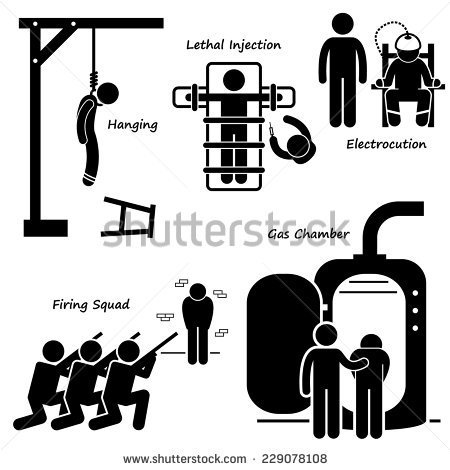
stock-vector-execution-death-penalty-capital-punishment-modern-methods-stick-figure-pictogram-icons-229078108

Righteousness fulfilled in us (4, 10)

Carnally minded = death & enmity (6-7)                         Spiritually minded = life & peace (6)

In the flesh/ after the flesh = unpleasing (8, 13)

   Through Spirit mortify deeds = ye shall live (13)

Have not the Spirit of Christ= not His/dead (9)               Quicken = Spirit is life/alive (10-11)

Debtor (12-13)

Slave in Bondage (15, 21)                                                                                  Redemption (v.23)

Himself a Lamb

                                                                                       Adoption (15) Children (16-17, 23)

Brothers (12, 29)

Sons of God (14, 19) / Heirs joint-heir (17)

The bondage of corruption (21)                             The glorious liberty of God’s children (21)

Hope (24)

Saints (27)

Intercession – Groanings (26-27, 34)

Lovers of God (28)

The Called (28, 30)

Foreknown (29) / Predestinated (29-30)

Conformed to Christ’s image (29)

Justified (30,33) / Glorified (17, 30)

Lost sheep to slaughter (36)                                         Not only found but – Conquerors (37)

Inseparable from God’s love (38-39)

www.google.com imgres Isaiah-53-Led-As-A-Lamb-To-The-Slaughter-cream-copy

http://www.google.com images Isaiah-53-Led-As-A-Lamb-To-The-Slaughter-cream-copy

A Must read for all Pastors & Ministry students (also church leaders, deacons, and educators)

The Art of Pastoring
(New Testament Principles for Pastoring Independent Baptist Churches) 
by Dr. David Sorenson – 1998


 The Art of Pastoring makes refreshing reading for the seasoned pastor, as well as inspiring instruction for the young pastor or ministerial student; several Christian colleges even use it as a text book. The Art of Pastoring recognizes the importance of preaching and church administration, but focuses instead on a frequent area of weakness, pastoring people. “Without a question, it is crucial for a pastor to be skilled in preaching and in the program management of a local church. However, if he does not pastor his people, his ministry will neither be happy nor long in one place.”

Reader’s Responses

“Because of the valuable material contained in this book, it will be required reading for the ministerial students at Ambassador Baptist College. It is a ‘must’ read for preachers, as well as local church laymen.”
Dr. Ron Comfort – President, Ambassador Baptist College

The Art of Pastoring is one of the most practical books concerning the pastorate I have ever read. It is a book that should be ‘must reading’ especially for the young pastor just starting in the ministry.”
Dr. Ed Johnson – Pastor, First Baptist Church
Rosemont, Minnesota

The Art of Pastoring is great. Truly it is a great overview of the office of a pastor. The emphasis is so needed in our day.”
Dr. Gordon Edgington
Association of Independent Baptist Chruches of Illinois

“The author has done a great and needed job in the biblical description of a pastor backed up by excellent exposition. Every student or pastor can profit greatly from this volume.”
Dr. Joe Mark, Evangelist

“The Art of Pastoring is filled with practical insights that will be a help and encouragement to every Bible-believing pastor.”
Dr. Frank Bumpus – Pastor, Bethel Baptist Church
Schaumburg, Illinois

“I believe this book will provide practical and spiritual help to young men who are called of God. Thank you for your thorough and helpful instruction.”
Dr. Ralph Martin – Pastor, Memorial Baptist Church
Rockford, Illinois

“This book is excellent. It offers a much needed emphasis on being a biblical pastor with a pastor’s heart. These biblical principles have worked for many.”
Dr. Bill Hall, Evangelist

“The Art of Pastoring is excellent! I was blessed by reading it.”
Dr Dell Johnson – Dean, Pensacola Theological Seminary

The Art of Pastoring, 227 pages


Description

Dr. Sorenson draws from from his father and grandfather over a century of experience in the ministry of Baptist churches. To that he adds more than 30 years of his own in the ministry. These many years have taught him the truth and power of a few simple, yet vital New Testament principles for pastoring.

The Art of Pastoring makes refreshing reading for the seasoned pastor, as well as inspiring instruction for the young pastor or ministerial student — several Christian colleges even use it as a text book.

The Art of Pastoring recognizes the importance of preaching and church administration, but focuses instead on a frequent area of weakness, pastoring people. “Without a question, it is crucial for a pastor to be skilled in preaching and in the program management of a local church. However, if he does not pastor his people, his ministry will neither be happy nor long in one place.”

“It is the goal of this book to share the principles contained in the Scripture which pertain to pastoring people.”


Table of Contents

  1. God Gave Pastors
  2. Shepherd the Flock!
  3. Love the People!
  4. Help the People!
  5. Preach the Word!
  6. Do the Work of an Evangelist!
  7. Take the Oversight Thereof!
  8. Study to Shew Thyself Approved!
  9. Pray Without Ceasing!
  10. A Servant’s Heart
  11. Flies in the Ointment
  12. Three Final Commands

Higher Order Thinking Skills

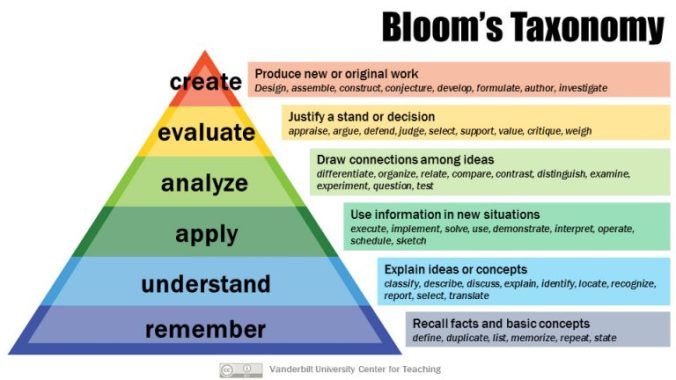
Bloom's-Taxonomy https cft.vanderbilt.edu guides-sub-pages blooms-taxonomy

Bloom’s-Taxonomy https cft.vanderbilt.edu guides-sub-pages blooms-taxonomy

Higher Order Thinking Skills (H.O.T.S.)

  1. Higher order thinking skills and Bloom’s Taxonomy have great merit to me as an administrator. I have just finished my sixth year in a school with 32 faculty members, and I was responsible to see that both the elementary & secondary-level principals developed their faculty to implement these thinking skills on every grade level and in every subject. Not only are the results of ACT testing affected by this type of teaching/learning, but H.O.T.S. also affects post-secondary success, life learning, and a person’s decision matrix.
  2. Today, textbook selection needs to be based on the types of thinking skills emphasized as well as on content (academic & spiritual). A school’s curriculum is not just the textbooks! Instructors need to supplement textbooks with their education and experience. Therefore, schools need to hire and train teachers to be fluent in the art of using higher order thinking skills, and thorough research should be conducted before the purchase of Christian school textbooks.
  3. I do not believe the problem lies in too much emphasis being placed on learning taxonomies such as Bloom’s. The problem is that little or no attention is placed on these higher order thinking skills in traditional Christian schools. Especially in the age of Millennials, we need to answer questions regarding thinking and the why – not just the what. Memorization is great on every foundational level, but we always need to be pushing to mastery (I/R/M).

*Catechisms are great for a foundation of truth; without the teaching of truth, there is no basis for the decision to make a personal choice (relationship with Christ). But the next logical step must be the incorporation of critical/H.O.T.S.


Today’s Christian Family / Education

stool

Christian educators must understand that since the premise, the purpose, and the process of education are all Christ-centered, the place of education must be Christ-centered as well. The primary responsibility of education rests with parents (Deut. 4:9-10; 6:1-9). The school is to complement what is being taught in the home and church. Historically, even going back to the Dutch educational system, Christians followed the Biblical principle of the “3-legged stool” – home, church, & school. The Bible commands believers to assemble for the purpose of exhorting one another (Heb. 10:25) and discusses the roles of pastors and teachers within the church who are given “for the perfecting of the saints” (Eph. 4:11-12).  Without the support of parents and the church, educators are limited in what they can accomplish.

Therefore, Christians need to 1) rear their children in the nurture and admonition of the Lord and maintain a home that follows the Bible in every situation, 2) be faithfully involved in a good Bible-believing church, and 3) train children in a good Bible-believing school away from the pervasive secular humanistic doctrine and ungodly influence of public schools.

I can give several specific examples (names) of families that are successfully accomplishing this biblical family role. BUT every one of them is doing the three above mentioned steps. There can be exceptions of course–homeschool (as long as Christian) or public school kids surviving in the school system—but in my opinion, the public system is not optimal and the students will need to be constantly debriefed. The rewriting of history and lack of teaching historical truth is an issue for another day.

Education must start & end with God. PRAYER is the key to all of our Christian endeavors. Our families must focus on God–pray, attend a good church, and minimize bad Influences–which again is why I advocate Christian school education over public education.

Combating Postmodernism in the Christian School

Infantry gearHow do administrators lead a school away from humanistic, postmodern thinking in an effective manner?

Postmodernism must be intentionally combated with pure Biblical Christian educational instruction both by the administration and the teachers. While the premise of Christian education is the communication of truth, the purpose of Christian education is discipleship. The Christian school educates children academically in order to disciple them Biblically. The New Testament church exists to carry out the Great Commission of Christ to “Go into all the world, and preach the Gospel” (Mk. 16:15), which is evangelism and to teach believers to observe all things He commanded them, which is discipleship (Matt. 28:20). God instructs us to “do all to the Glory of God” (I Co. 10:31) and to do everything with all our “might” (Ec. 9:10); therefore, since we are in the business of education, we should also pursue academic excellence.

Because the purpose of Christian education is the transformation of the student into the image of Christ through the renewing of the mind – discipleship (Ro. 12:2), the teacher must first be committed to education that is thoroughly Christian. Administrators must choose teachers, not only on the basis of calling and academic qualifications, but also on their ability to relate spiritual truths to the students and to live godly lives before them (Deuink, 1991, Preparing the Christian school for the 21st century. BJUP, p. 47). The teacher must be able to instruct properly, consistently, and appropriately to help the student reach mastery.

Christian educators must understand that the premise, purpose, process, and place of education is essential to the training of children for Christian leadership. One’s philosophy of Christian education is of utmost importance in determining how to oversee a Christian school. Teachers must be able to communicate Biblical truth in order for them to effectively teach and model that truth to the students. Successful Christian education consists simply of godly teachers coming alongside parents to “train up a child in the way he should go” (Pr. 22:6) both academically and spiritually so that the students will “observe to do” and “have good success” (Josh. 1:7-8).

This battle we face is difficult, but one that is well worth the fight—the fight for Biblical truth. The communication of a Biblical worldview must be intentional, encompassing, and incorporated into everything the school does.


What is your Biblical Worldview

Photo published for Biblical Worldview

http://blog.mtparanschool.com

https://t.co/b9wGhkGKVM

Christian School(CS) Websites – Worldview / Philosophy

Great article and school with a focused purpose of having an intentional Christian worldview.

My wife and I went to the Reagan Library for a Worldview Conference put on by Precept Mkt. / BJUP a couple years ago where Glen Schultz spoke. Dr. Schultz looked at every Christian school’s website represented at that conference; he challenged us to make our mission and philosophy clear with a proper Biblical worldview driving it. As one looks at various Christian school’s websites it is sad but not shocking to see the lack of a stated mission – much less a Biblical approach that comes as a result of this philosophy.

Some Christian schools are intentional in their philosophy and mission, while some others are good but maybe not as clear or even antiquated – maybe because the administration is not allowed to change the “traditions” of the school.

Here is an example from one such website (a former school):

XXX CS was founded to help parents carry out the scriptural command to “train up a child in the way he should go.”  (Proverbs 22:6) Christian education is a joint venture.  When the Christian home works together with the Christian school and the Church, the child is most likely to receive the full blessings of a Christian education.

XXX CS exists to equip man for duty to God.  Ecclesiastes 12:13 states, “Let us hear the conclusion of the whole matter: fear God, and keep His commandments: for this is the whole duty of man.” 

The goal of XXX CS is for each student to have eternity set in his heart.  As Ecclesiastes 9:10 states, “Whatsoever thy hand findeth to do, do it with thy might; for there is no work, nor device, nor knowledge, nor wisdom, in the grave, whither thou goest.”  Therefore, XXX CS strives to help each student to achieve his or her best in Biblical, spiritual, academic, citizenship, and relational goals through its curriculum and instructional methods, that each student may know God’s will for his or her life and pursue it.

The staff of XXX CS welcomes the opportunity of working with you and your children this year.  We will endeavor to uphold the highest spiritual and academic standards possible here at XXX CS

Your child is important to us; therefore, we must be guided by a common purpose.  “Train up a child in the way he should go: and when he is old, he will not depart from it.”  (Proverbs 22:6)


God has equipped and called teachers to minister His Word to the next generation

welcome1.jpgGod has equipped and called teachers to minister His Word to the next generation.

August is here! – and many teachers are getting ready to start back to the education world ;(

Truly, God has equipped & called some to be teachers. I have observed and hired many teachers through the years. Some look good on paper and have a great academic record, but yet cannot teach. While the statement “You can teach skill but passion is priceless” is true, I have seen some that have skill & passion but still cannot teach (some will learn in time if they continue), but I believe there is an innate ability in a “naturally” gifted & called teacher. This gift shows up in the area of classroom management particularly; today’s students are a lot more difficult to handle than children of the past. If you do not have control of the class … no learning will happen. Control begins with the instructor’s always being prepared (with no down time) and the instructor’s ability to draw the student into the material (the gift manifested). Some may say that they have 25 years of experience teaching – but don’t let it be said of you that you have 1 year of experience & 24 years of doing it the wrong way! Have a great start to your school year 🙂

Full-time Christian Service

Old bible

“…But to Minister,…” (Mark 10:45)

Definition – The Gospel ministry = the greatest calling for a Biblically qualified, spiritually mature, willing servant-leader who faithfully takes the responsibility to perfect the saints for the work of the ministry by humbly leading, nourishing, nurturing, reproving, rebuking, and exhorting — by the power of God’s Word and His Spirit (2Tim. 4:2; Eph. 4:11-13). {This is predominately describing the pastor, but most of these attributes should apply to those in all full-time ministry pursuits.}

While all believers are called to “full-time” Christian service (Eph. 4:1, 12), all are not full-time “vocationally” (Eph. 4:11; 1Tim 3; Titus 1).

While recently preaching about discipleship in a church as part of the deputation process for my new ministry, I made the following statement: I used to get indignant about how all young Christians need to be training to go into a vocational ministry. I used to preach that if you listen carefully enough, then you will hear God’s calling in your life. While that is true to an extent, we must all be striving to be 1.) Scripturally qualified 2.) willing/desire for ministry 3.) Biblically trained (seminary)  4.) called by God. I would say, let the unsaved be mechanics, doctors, lawyers, professionals – the Christian must go and evangelize & make disciples (Mt. 28:19-20). But now I realize that it does take a special call – God knows that the ministry is hard and only the called could survive the ministry. But more importantly than that, “but to minister” (Mk 10:45) is for all Christians, not just those that minister for a living. Our sphere of influence is such that it takes all kinds of skills to reach particular individuals (our own sphere). Granted, we all must be living in a way that we can reach those around us – it is our responsibility as well as our privilege to witness and disciple (great commission). We need to have knowledge, be praying, allow God’s Spirit to flow through us, and model Him; THEREFORE, the Christian school & liberal arts colleges should be preparing ALL students for the “full-time” ministry — and some will be paid for their ministry too.